
Search News
Industry Portal
Hot Articles
- How to Evaluate an NDT Inspection Company for Amusement Ride Safety ComplianceChoose an NDT inspection company for amusement ride safety compliance with proven expertise, risk-based methods, clear reporting, and reliable corrective-action support.
- How to Evaluate Ski Resort Lift Suppliers for Capacity, Terrain, and Lifecycle SupportChoose a ski resort lift supplier with confidence: compare capacity, terrain resilience, wind performance, safety planning, and lifecycle support for smarter investments.
- Amusement Ride Dynamics: How Engineers Control G-Forces, Jerk, and Rider ComfortAmusement ride dynamics explained: see how engineers manage G-forces, jerk, restraints, braking, and testing to deliver safer, smoother rider comfort.
Popular Tags
What determines passenger ropeways life cycle cost
auth.
Time
Click Count
For financial decision-makers, passenger ropeways are not defined by purchase price alone. Their life cycle cost is shaped by a complex mix of capital investment, energy use, maintenance strategy, spare parts, compliance demands, downtime risk, and long-term throughput performance. Understanding these cost drivers is essential to balance safety, operational reliability, and return on investment in modern mountain tourism and leisure transport projects.
In mountain tourism, scenic access, ski transport, and cross-valley mobility, passenger ropeways function as long-life infrastructure rather than short-term equipment purchases. A gondola, aerial tramway, or detachable chairlift may serve for 20–30 years, yet its economic result is often determined in the first 3–5 years through design choices, operating assumptions, and maintenance discipline.
For budget approvers, the key question is not simply “What does the ropeway cost to buy?” but “What will this system cost to own, operate, maintain, and renew across its full service life?” That broader view is where capital efficiency, safety resilience, and passenger throughput meet.
The Core Components of Passenger Ropeways Life Cycle Cost
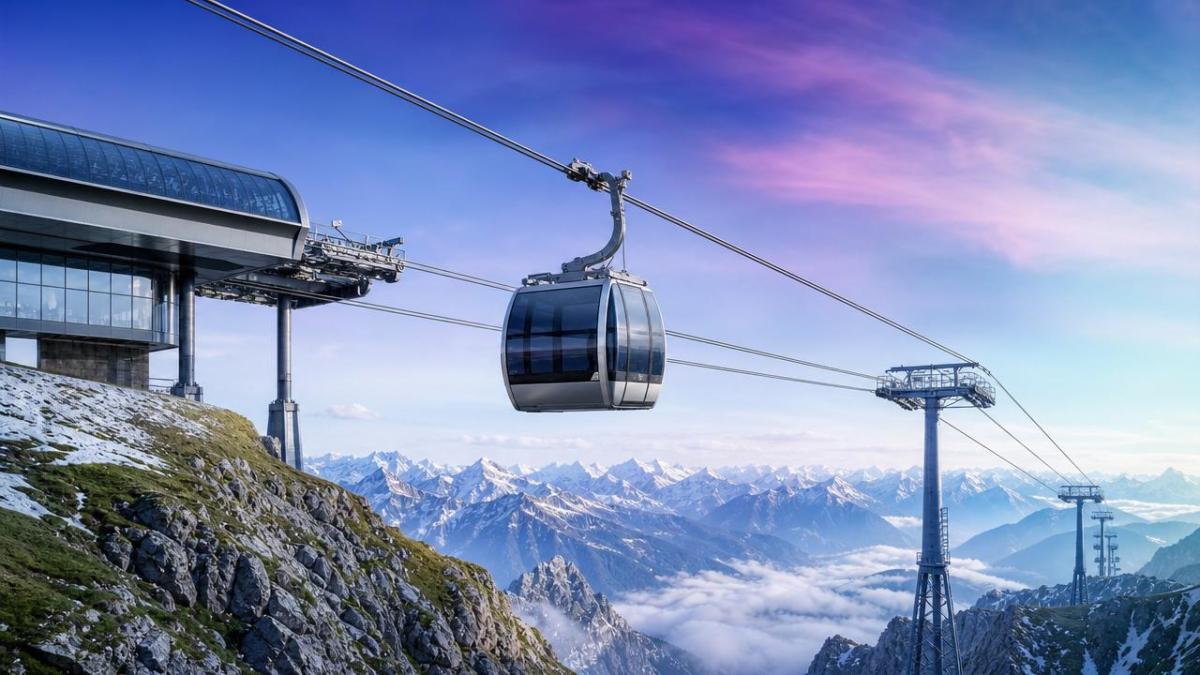
Passenger ropeways life cycle cost usually falls into 6 major buckets: initial capital expenditure, energy consumption, labor, maintenance, spare parts, and compliance-related cost. In many projects, the purchase and installation phase represents only 35%–55% of total 25-year ownership cost.
That means a lower bid price can still produce a weaker financial outcome if the system consumes more power, requires more shutdowns, or depends on expensive imported parts with 8–16 week lead times. For finance teams, total cost visibility matters more than headline procurement savings.
1. Capital expenditure is only the starting point
The upfront budget for passenger ropeways normally includes civil works, towers, stations, drive systems, grips, carriers, controls, evacuation equipment, installation, testing, and commissioning. In alpine or remote terrain, civil and logistics costs can add 15%–30% beyond the mechanical package itself.
A detachable gondola with higher hourly capacity may require more initial investment than a fixed-grip system, but if it increases passenger throughput by 25%–50% during peak season, the revenue and queue-management effect can justify the difference over time.
Typical capex variables
- Line length and vertical rise
- Number of towers and station complexity
- Detachable versus fixed-grip technology
- Cabin or chair capacity, often 4, 6, 8, or 10 passengers
- Wind design criteria and evacuation requirements
- Grid connection and backup power provisions
2. Energy cost depends on design efficiency and operating profile
Energy use is one of the most visible operating costs in passenger ropeways, especially in regions with volatile electricity tariffs. Actual consumption depends on motor size, line geometry, passenger load, ambient temperature, operating speed, and daily running hours.
A system operating 10–12 hours per day across a 120-day winter season and 90-day summer season faces a very different cost base from a scenic line running only 6 hours daily. Variable speed control, regenerative solutions where applicable, and smart dispatch logic can reduce wasted energy during low-demand periods.
3. Maintenance strategy has direct cost and indirect revenue impact
Maintenance is not only a workshop expense. It also determines availability, brand reputation, and ticket revenue. Preventive maintenance may seem more expensive on paper than corrective repair, yet unplanned failure during a holiday week can create a much larger financial loss.
For most passenger ropeways, annual maintenance planning includes daily inspections, weekly checks, monthly lubrication and adjustment tasks, seasonal shutdown service, and major inspections at longer intervals such as 5, 10, or 15 years, depending on local rules and manufacturer guidance.
The table below outlines how major cost drivers typically behave across the service life of passenger ropeways.
The key takeaway is that cost escalation usually comes from recurring operational and reliability issues, not from the original invoice alone. Financial planning should therefore treat passenger ropeways as an asset portfolio with predictable renewal cycles, not a one-time procurement line.
What Financial Approvers Should Evaluate Before Approval
A strong business case for passenger ropeways should combine engineering data with operational assumptions. When approval is based only on capex comparison, hidden lifetime costs often remain invisible until year 2 or 3, when maintenance, staffing, and downtime start affecting cash flow.
Throughput, utilization, and revenue sensitivity
Throughput is a critical economic variable. A ropeway moving 1,800 passengers per hour versus 2,800 passengers per hour can produce very different queue times, guest satisfaction scores, and revenue capture during peak weekends or holiday periods.
If a resort loses 2 peak operating days due to technical stoppage, the missed ticket, rental, dining, and lodging revenue can exceed a full quarter of scheduled maintenance cost. That is why availability targets such as 98%–99% matter in financial review.
Lifecycle modeling should include at least 8 variables
- Acquisition and installation cost
- Annual energy consumption
- Operating labor per shift
- Routine maintenance cost per year
- Major overhaul intervals
- Spare parts inventory value
- Expected downtime hours
- Residual value or modernization cost after 20–25 years
Compliance cost is often underestimated
Passenger ropeways operate under strict inspection, testing, and documentation requirements. Depending on jurisdiction, operators may face annual certification routines, periodic NDT checks, emergency drill requirements, and control-system validation. These activities have both direct service cost and indirect lost-operation cost.
Older systems can become more expensive if replacement parts are obsolete or if control retrofits are required to align with newer safety expectations. A lower-cost legacy platform may therefore carry higher compliance risk than a more standardized current-generation system.
Before approving a project, finance teams should compare more than ticket price. The matrix below helps structure the review of passenger ropeways from a total-cost perspective.
This framework is especially useful for tourism groups, ski operators, scenic area developers, and public-private transport projects that need a defendable approval record. It shifts discussion from vendor promises to measurable cost behavior over 10, 20, and 25 years.
The Hidden Cost Drivers That Often Change ROI
In passenger ropeways, hidden costs are rarely invisible to operations teams, but they are often underrepresented in board-level approval papers. These drivers can materially change net present value, especially where seasonality, weather, and high guest expectations intersect.
Downtime is more expensive than many models assume
If a scenic ropeway closes for 6 hours during a holiday surge, the financial impact is not limited to refunded tickets. It may also include lost food and beverage spend, delayed guest circulation, staffing inefficiency, reputational damage, and reduced repeat visitation.
For that reason, downtime should be modeled in both technical and commercial terms. Many operators use 3 scenarios: planned downtime, short unplanned stoppage under 2 hours, and major outage above 1 day. Each scenario carries a different revenue penalty.
Spare parts policy directly affects working capital
A minimal spare parts inventory may reduce initial cash outlay, but it can sharply increase outage duration when a specialized component fails. On the other hand, excessive stock ties up capital in low-turn items. The right balance usually requires classification into critical, operational, and consumable parts.
A practical model is to hold critical parts with lead times above 6 weeks on site, operational parts in a regional pool, and routine consumables for 6–12 months of normal use. This improves service continuity without overstretching warehouse budget.
Climate and terrain increase wear patterns
Passenger ropeways in coastal, icy, or dust-heavy environments may require more aggressive inspection cycles. Corrosion, wind exposure, freeze-thaw effects, and contamination can accelerate wear on grips, sheaves, bearings, and electrical enclosures.
That means two ropeways with similar purchase prices can diverge significantly in annual maintenance cost if one operates in a milder climate and the other in high-altitude or corrosive conditions. Financial models should therefore reflect site-specific maintenance multipliers instead of generic benchmarks.
Common hidden cost items
- Weather-related stoppages and restart procedures
- Evacuation drill labor and emergency preparedness
- Specialized technician travel and accommodation
- Seasonal storage, cleaning, and corrosion protection
- Software updates or control retrofit requirements
How to Reduce Passenger Ropeways Life Cycle Cost Without Compromising Safety
Cost reduction in passenger ropeways should never come from under-maintenance or weak safety margins. The smarter path is to reduce unnecessary operating cost while protecting reliability, compliance, and guest throughput.
Prioritize maintainability at the design stage
A system that is easier to inspect and service can save thousands of labor hours over 20 years. Access platforms, modular assemblies, standardized components, and diagnostic-friendly controls often deliver more value than a marginally lower initial purchase price.
For finance teams, this means maintainability should be treated as a cost lever. If a design cuts major service time by 15%–20% each season, the cumulative savings can materially improve whole-life economics.
Use condition-based maintenance where practical
Condition monitoring can help operators move from fixed-interval service toward risk-based intervention. Vibration checks, temperature trend monitoring, lubrication analysis, and fault logging can identify issues earlier and reduce major failure events.
This approach is particularly relevant to high-utilization passenger ropeways serving premium ski resorts or all-season mountain attractions. The financial benefit comes from extending component life, reducing secondary damage, and planning shutdowns during low-revenue windows.
Align throughput with actual demand patterns
Overspecifying capacity can inflate both capex and opex, while underspecifying can create queues and lost revenue. A realistic demand study should examine at least 3 traffic bands: average weekday, peak weekend, and holiday extreme.
If a route needs 2,400 passengers per hour only on 20 days a year, a flexible operating strategy may be more economical than buying a much larger system sized for rare extremes. The right answer depends on revenue concentration, brand positioning, and acceptable wait time.
Plan modernization before obsolescence arrives
Midlife upgrades often cost less than waiting for reliability to deteriorate. Controls, drives, communication systems, and passenger cabins can sometimes be renewed in phases, spreading capex over 2–4 budget cycles instead of forcing a major single-year replacement.
That phased strategy is especially attractive for operators balancing debt service, seasonal cash flow, and long-term destination investment. It also helps maintain guest perception while preserving core line infrastructure where technically suitable.
A Practical Approval Checklist for Finance Teams
When reviewing passenger ropeways proposals, finance leaders need a disciplined checklist that converts engineering complexity into board-level decision criteria. The aim is to avoid approving a low visible cost that later becomes a high invisible burden.
Five questions worth asking before sign-off
- What is the modeled 20–25 year total cost of ownership under realistic utilization assumptions?
- Which components are expected to require major overhaul, and in what year windows?
- What uptime target is assumed, and what revenue loss is attached to downtime scenarios?
- How localized is technical support, and what are the lead times for critical parts?
- What modernization path exists if standards, demand, or guest expectations change?
Why this matters in the leisure transport sector
Within tourism and leisure infrastructure, passenger ropeways are more than transport assets. They shape guest arrival patterns, scenic access, mountain capacity, and destination reputation. A financially sound ropeway therefore supports both operational continuity and commercial strategy.
For intelligence-driven organizations such as TALS, the most valuable procurement discussions happen where engineering reality meets financial discipline: safety obligations, throughput economics, maintainability, and long-horizon capital planning.
The life cycle cost of passenger ropeways is determined by a combination of capex, energy demand, maintenance philosophy, spare parts strategy, compliance obligations, environmental conditions, and above all the cost of downtime. Financially successful projects are typically those that model 20–25 years of ownership instead of focusing only on year-0 purchase price.
If you are evaluating a new ropeway investment, a modernization plan, or a comparative supplier review, a structured total-cost assessment will improve both budget confidence and long-term asset performance. Contact us to discuss your passenger ropeways cost model, request a tailored evaluation framework, or explore more solutions for mountain tourism and leisure transport projects.
Recommended News