Search News
Industry Portal
Hot Articles
- How to Evaluate an NDT Inspection Company for Amusement Ride Safety ComplianceChoose an NDT inspection company for amusement ride safety compliance with proven expertise, risk-based methods, clear reporting, and reliable corrective-action support.
- How to Evaluate Ski Resort Lift Suppliers for Capacity, Terrain, and Lifecycle SupportChoose a ski resort lift supplier with confidence: compare capacity, terrain resilience, wind performance, safety planning, and lifecycle support for smarter investments.
- Amusement Ride Dynamics: How Engineers Control G-Forces, Jerk, and Rider ComfortAmusement ride dynamics explained: see how engineers manage G-forces, jerk, restraints, braking, and testing to deliver safer, smoother rider comfort.
Popular Tags
Gulf States Tighten Ropeway Import Compliance
auth.
Time
Click Count
On July 12, 2026, Saudi Arabia, the United Arab Emirates, Qatar, Oman, Bahrain, and Kuwait jointly put a mutual recognition program called the Ropeway Safety Passport into effect for imported detachable gondola lifts. The move deserves close attention from exporters, manufacturers, compliance teams, port-facing logistics providers, and project buyers because it links market access to ISO 18878:2024, bilingual Arabic-English operating and maintenance manuals, and localized emergency response documentation, with immediate customs and cost consequences for non-compliant shipments.
What the new requirement formally includes
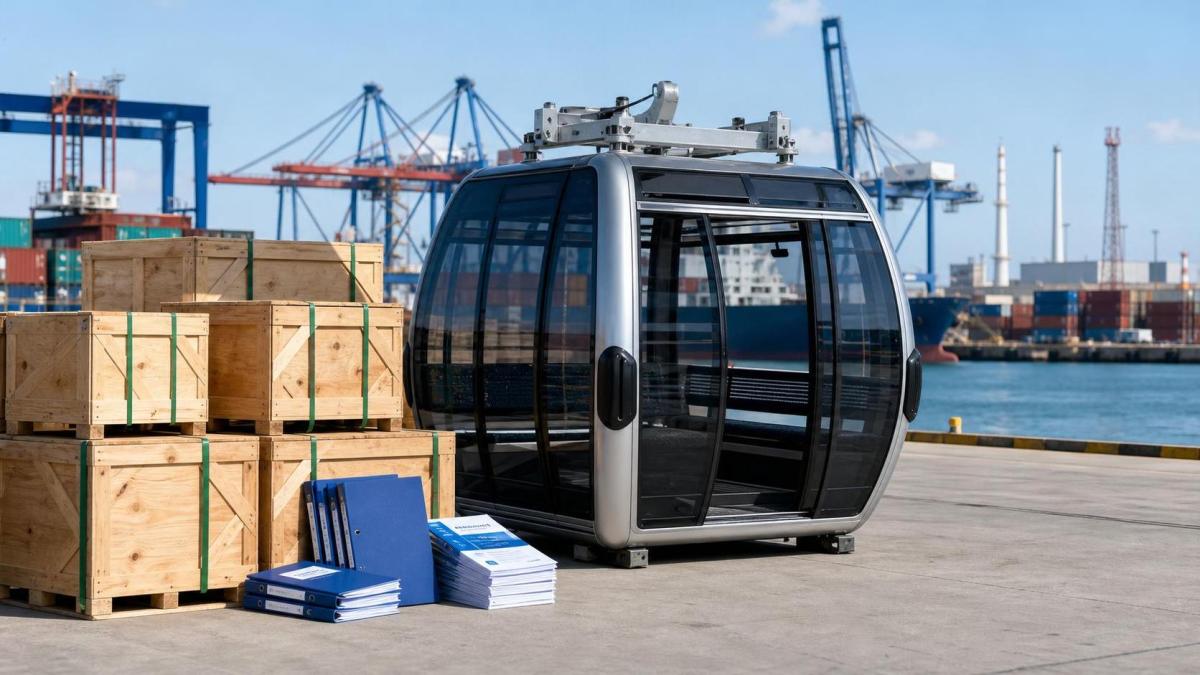
The confirmed information is limited but clear on several points. The six Middle Eastern countries announced the mutual recognition mechanism on July 12, 2026, and stated that it takes effect immediately. Under this plan, all imported detachable gondola lifts must comply with the lifecycle safety requirements set by ISO 18878:2024. They must also be accompanied by bilingual Arabic-English operation and maintenance manuals, as well as localized emergency response protocols.
The provided information also states that for Chinese exporters, shipments that do not complete manual localization and obtain endorsement from an NB body will be held at Jebel Ali Port in Dubai and charged an additional compliance rectification fee.
Where the pressure will likely appear first
Export transactions now hinge on document readiness
From an industry perspective, direct trading companies and export-facing sales teams are likely to feel the impact first because the new mechanism ties customs clearance to documentation and conformity evidence, not only to equipment delivery. The key business risk is no longer limited to product shipment; it extends to whether manuals, safety materials, and supporting endorsements are complete before cargo reaches port.
Manufacturing and technical documentation move closer together
For manufacturers and engineering teams, the requirement may affect the handoff between product design, safety documentation, and after-sales preparation. Analysis shows that even where equipment production is complete, market entry may still be disrupted if lifecycle safety alignment with ISO 18878:2024 and the required Arabic-English materials are not prepared in parallel.
Logistics and port-facing service providers face execution risk
Supply chain service providers, including shipment coordinators and customs-facing operators, may be affected because the stated consequence for non-compliance is cargo detention at Jebel Ali Port together with rectification charges. What deserves closer attention is that delivery schedules, storage exposure, and corrective processing may all become part of the compliance workflow rather than a separate post-arrival issue.
Project buyers and end users may shift their supplier screening
Buyers, operators, and downstream project stakeholders may also need to adjust procurement checks. Observably, the requirement is framed around both technical safety compliance and localized operating readiness, which means supplier evaluation may increasingly depend on whether a vendor can deliver the equipment package and the supporting operational documents together.
What companies should review now
Check whether localization is treated as a customs requirement
Companies involved in detachable gondola lift exports to the six markets should pay attention to the practical status of Arabic-English manual localization in their transaction process. The immediate point is not only translation quality but whether the manuals are organized as clearance-critical documents rather than supplementary materials prepared later.
Confirm the role of NB endorsement in shipment timing
The provided information specifically mentions NB endorsement as a condition tied to avoiding cargo detention for Chinese exporters. Businesses should therefore review whether endorsement is already built into pre-shipment compliance milestones, contract schedules, and document release procedures.
Separate announced policy language from operational implementation
Analysis shows that one of the main execution risks will be the gap between a published rule and the way it is checked in actual shipments. Companies should watch for any further official wording, port-level interpretation, or procedural clarification related to the Ropeway Safety Passport, ISO 18878:2024 alignment, bilingual manuals, and localized emergency response protocols.
Prepare customer communication around lead times and responsibilities
Exporters, suppliers, and service partners should also review how they communicate responsibility for manuals, endorsements, and emergency documentation with buyers. What deserves closer attention is whether contracts, delivery commitments, and document ownership reflect the new compliance burden clearly enough to prevent disputes once cargo is already moving.
Why this looks bigger than a one-off paperwork change
This section is analysis rather than confirmed fact. It is more appropriate to understand this development as a signal that market access for ropeway equipment in these six countries is being tied more tightly to lifecycle safety proof and locally usable operating documentation. The immediate trigger is customs clearance, but the underlying message appears to be that technical conformity and operational preparedness are being treated as a combined entry condition.
At the same time, it would be premature to treat this as a fully settled long-term framework beyond the facts provided here. Observably, the current information confirms the launch, the core compliance items, and the consequence for non-compliant Chinese exports at Jebel Ali Port, but the broader enforcement pattern and any later procedural refinements still require continued observation.
How the market may best read this update for now
The practical significance of this announcement lies in its immediacy. It does not read as a distant policy direction; it is already framed as an active requirement for imported detachable gondola lifts. From an industry perspective, the most balanced reading is that this is both a near-term operational change and a longer-term compliance signal. In the short term, it affects documents, endorsements, and port clearance. In the broader sense, it suggests that suppliers entering these markets may increasingly be judged on their ability to deliver localized safety documentation alongside the equipment itself.
Basis of this article and points still to verify
This article is based on the user-provided news title, event date, and event summary. For this type of development, relevant source categories would usually include official government notices, customs or port announcements, company statements, industry association updates, authoritative media coverage, and standards-related documents. However, a specific official source link was not provided in the input, so the exact official publication path still needs ongoing verification. Follow-up attention should focus on any later official clarification about implementation procedures, document review standards, and enforcement details connected to the Ropeway Safety Passport mechanism.
Recommended News