
Search News
Industry Portal
Hot Articles
- How to Evaluate an NDT Inspection Company for Amusement Ride Safety ComplianceChoose an NDT inspection company for amusement ride safety compliance with proven expertise, risk-based methods, clear reporting, and reliable corrective-action support.
- How to Evaluate Ski Resort Lift Suppliers for Capacity, Terrain, and Lifecycle SupportChoose a ski resort lift supplier with confidence: compare capacity, terrain resilience, wind performance, safety planning, and lifecycle support for smarter investments.
- Amusement Ride Dynamics: How Engineers Control G-Forces, Jerk, and Rider ComfortAmusement ride dynamics explained: see how engineers manage G-forces, jerk, restraints, braking, and testing to deliver safer, smoother rider comfort.
Popular Tags
Saudi, Oman Join Ropeway Passport Scheme
auth.
Time
Click Count
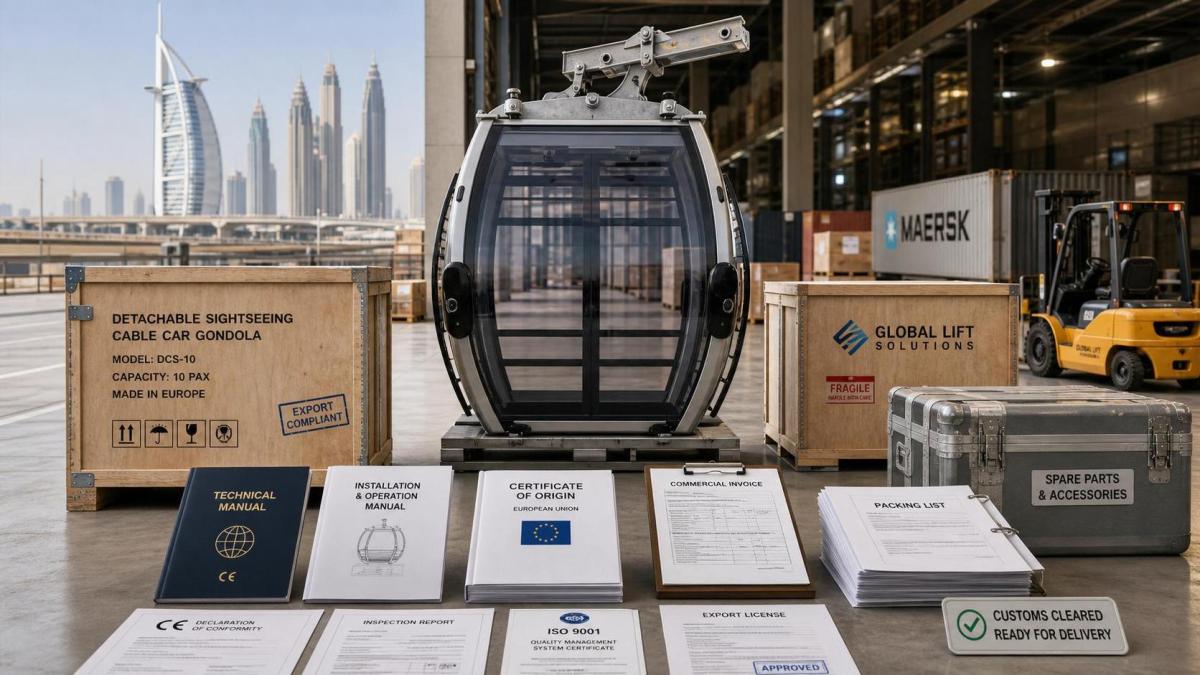
On July 11, 2026, Saudi Arabia and Oman formally joined the Middle East mutual recognition framework known as the Ropeway Safety Passport, extending a compliance pathway already used in the UAE, Qatar, and Bahrain. For companies handling detachable gondola lifts, the immediate relevance is practical: ISO 18878:2023 together with an Arabic operating manual is now accepted as the core import documentation in the two new markets, removing the need for repeated local type testing and pointing to a shorter customs cycle across the Dubai-Riyadh-Muscat corridor.
What Changed on July 11
The confirmed change is the expansion of the Ropeway Safety Passport mutual recognition mechanism to Saudi Arabia and Oman as of July 11, 2026. With that expansion, the two new members now accept ISO 18878:2023 plus an Arabic operating manual as the key import clearance documentation for detachable gondola lifts. Based on the information provided, this means importers no longer need to repeat local type testing for these products. The expected operational result is a reduction in average customs clearance time across Dubai, Riyadh, and Muscat from 14 days to 8.5 days.
Where the Impact May Be Felt First
Equipment suppliers and cross-border sellers
From an industry perspective, suppliers of detachable gondola lifts may feel the effect most directly in pre-shipment planning and market entry timing. If the stated documentation is sufficient for clearance in the newly added markets, the commercial timeline between order readiness and border release could become more predictable. What deserves closer attention is whether suppliers have already aligned their document packages to the new acceptance standard, especially the Arabic operating manual requirement.
Importers, distributors, and project procurement teams
For importers and procurement teams, the likely impact sits in delivery scheduling and coordination risk. A shorter average clearance window can affect how buyers plan installation milestones, handover sequencing, and buffer time at the border. Analysis shows that the main point to watch is not only the headline reduction in days, but also whether internal procurement documents, technical files, and customs submissions are prepared consistently enough to capture that time advantage in practice.
Logistics and customs service providers
Supply chain service providers may see a change in document review workflows. If repeated local type testing is no longer required in Saudi Arabia and Oman for qualifying detachable gondola lifts, customs brokerage and compliance teams will need to focus more heavily on verifying that the ISO 18878:2023 file set and Arabic-language manual meet the expected submission standard. Observably, this shifts some operational emphasis from repeated testing arrangements to document completeness and filing accuracy.
What Companies Should Watch Now
Document readiness will matter more than general awareness
The policy signal is clear, but business execution depends on whether import files are already structured around ISO 18878:2023 and supported by an Arabic operating manual. Companies involved in upcoming shipments should pay close attention to whether their current documentation can be used without further adaptation.
The distinction between recognition and day-to-day clearance practice
Analysis shows that a mutual recognition mechanism and actual border handling are not always identical in day-to-day operations. Businesses should therefore watch for any further official wording, implementation notes, or port-level practices that affect how the new acceptance rule is applied in real transactions.
Delivery promises and customer communication
For sales teams, project managers, and after-sales coordinators, the expected reduction from 14 days to 8.5 days may influence promised lead times. What deserves closer attention is how that estimate is communicated to customers: as an expected improvement based on the new framework, not as a guaranteed result for every shipment.
Supplier coordination and contingency planning
Companies relying on multiple external partners should review who is responsible for the technical file, the Arabic manual, and customs submission quality. Even where duplicate local type testing is no longer required, gaps in supplier qualification, translation readiness, or document handoff could still delay release.
Why This Looks More Like a Structural Signal
Observably, this development carries meaning beyond a single customs metric. The immediate fact is a narrower set of required import steps for detachable gondola lifts in two additional Gulf markets. Analysis shows that the broader signal is regional alignment around a recognized documentation pathway. At the same time, it is more appropriate to understand this as a live implementation development rather than a fully settled end state, because the practical value for companies depends on consistent execution at the documentation and clearance level.
How to Read the Development at This Stage
The industry significance of this update is real but should be read with discipline. In the short term, it points to a more efficient import process for detachable gondola lifts moving through the Dubai-Riyadh-Muscat route. In a longer view, it suggests that compliance recognition may become a more important competitive factor in cross-border equipment delivery. For now, it is more appropriate to understand this as a concrete operational improvement with wider strategic implications that still require continued observation.
Basis of This Article
This article is based on the user-provided news title, event date, and event summary. For this type of development, relevant source categories typically include official notices, company statements, industry association updates, authoritative media reporting, and standards organization documents. A specific official source link was not provided in the input, so the exact wording and implementation details still need continued verification. Follow-up attention should focus on any later official clarification, application details in Saudi Arabia and Oman, and whether the stated customs time reduction is reflected consistently in actual clearance practice.
Recommended News