Search News
Industry Portal
Hot Articles
- How to Evaluate an NDT Inspection Company for Amusement Ride Safety ComplianceChoose an NDT inspection company for amusement ride safety compliance with proven expertise, risk-based methods, clear reporting, and reliable corrective-action support.
- How to Evaluate Ski Resort Lift Suppliers for Capacity, Terrain, and Lifecycle SupportChoose a ski resort lift supplier with confidence: compare capacity, terrain resilience, wind performance, safety planning, and lifecycle support for smarter investments.
- Amusement Ride Dynamics: How Engineers Control G-Forces, Jerk, and Rider ComfortAmusement ride dynamics explained: see how engineers manage G-forces, jerk, restraints, braking, and testing to deliver safer, smoother rider comfort.
Popular Tags
GRTIA Cuts Tariffs on Detachable Gondola Lifts
auth.
Time
Click Count
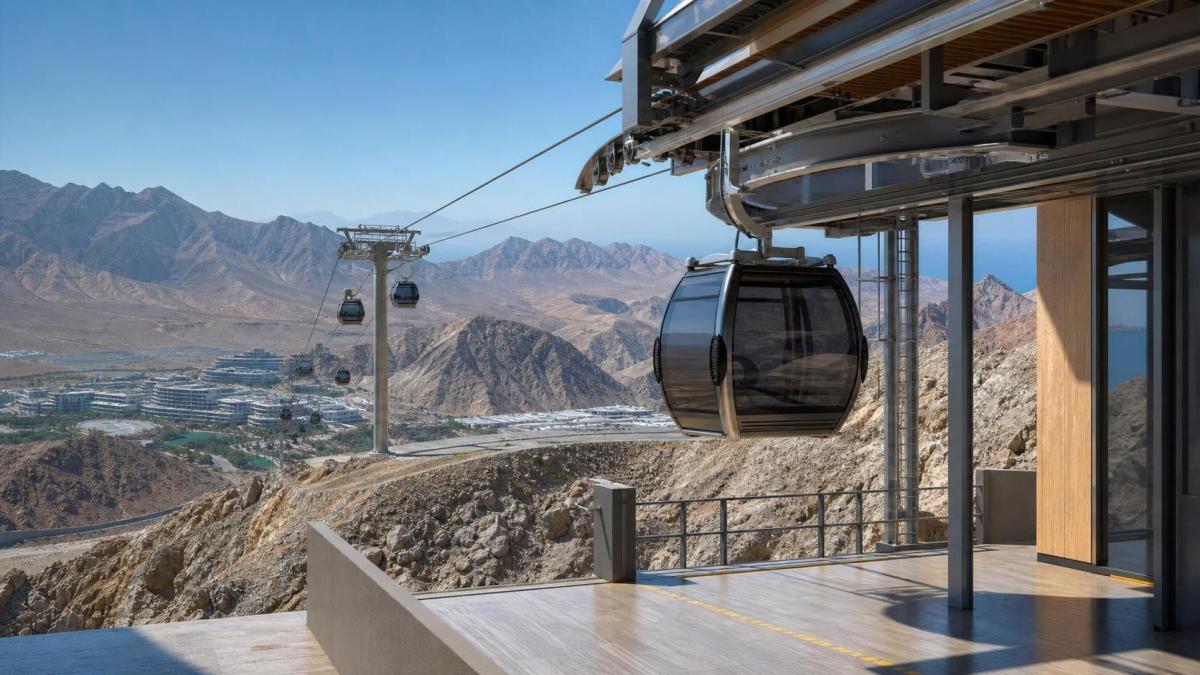
On July 2, 2026, the tourism infrastructure alliance covering Saudi Arabia, the United Arab Emirates, Qatar, Oman, Bahrain, and Kuwait announced a new Green Leisure Infrastructure Priority Procurement Program. For companies involved in detachable gondola lift systems, the update matters for two immediate reasons: import tariffs on qualifying systems move from 8% to 0%, and local type certification can proceed through a Fast-Track Pathway with a 14-working-day timeline. For manufacturers, importers, project procurement teams, and certification service providers, this is not just a policy notice; it changes the commercial and compliance conditions tied to eligible leisure transport equipment.
What the Six-Country Program Confirms
The confirmed facts are limited but commercially relevant. GRTIA announced the program on July 2, 2026. The measure applies to detachable gondola lifts that meet ISO 50001 energy management certification requirements. For those qualifying systems, the import tariff is reduced from 8% to 0%. In parallel, a local type certification Fast-Track Pathway has been opened, and the certification period is compressed to 14 working days. The announcement covers six markets: Saudi Arabia, the United Arab Emirates, Qatar, Oman, Bahrain, and Kuwait.
Where the Immediate Pressure Points Appear
Equipment suppliers and cross-border sellers
From an industry perspective, suppliers of detachable gondola lifts may be affected first because the policy directly changes import cost treatment and certification timing for qualified systems. The main business impact is likely to appear in quotation structure, bid competitiveness, and delivery planning. What deserves closer attention is whether product documentation clearly demonstrates ISO 50001 alignment, because eligibility is tied to that condition.
Procurement teams for tourism infrastructure
Buyers and procurement departments may also see a practical shift in how they screen offers. Analysis shows that a zero-tariff route plus an accelerated local certification window can alter procurement comparisons between compliant and non-compliant systems. The key business link here is tender evaluation and supplier prequalification, especially where procurement schedules are tight and compliance review affects project timing.
Certification and market-entry service providers
Service providers involved in compliance, documentation, and market-entry preparation are likely to face changes in workflow. The Fast-Track Pathway shortens the formal timeline to 14 working days, which increases the value of complete technical files and accurate submission sequencing. Observably, the critical issue is less the existence of the pathway itself and more whether companies can prepare documentation to match a compressed review cycle.
Logistics and supply chain coordination roles
Supply chain participants may be indirectly affected because tariff treatment and certification timing both influence shipment planning and import sequencing. What deserves closer attention is the coordination between customs treatment, certification readiness, and project delivery milestones. Even where demand assumptions remain unclear, the administrative pace of a transaction can change materially when both cost and approval timing are adjusted together.
What Companies Should Track Next
Eligibility details behind ISO 50001 alignment
Companies should pay close attention to how qualifying status is interpreted in practice. The announcement confirms that ISO 50001 energy management certification is the threshold condition, but businesses will still need to verify how that requirement is reflected in procurement documents, technical submissions, and local review expectations.
Differences between policy language and operational acceptance
Analysis shows that policy relief and operational clearance are not always identical in day-to-day execution. Firms should monitor whether tariff exemption and fast-track certification are applied smoothly across commercial, customs, and technical review stages, rather than assuming the headline policy automatically resolves every procedural step.
Document readiness and submission discipline
With a 14-working-day certification target, document quality becomes a practical risk point. Manufacturers, importers, and local representatives should focus on technical files, certification evidence, and submission completeness, because compressed timelines typically leave less room for correction cycles.
Customer communication and bid planning
Teams facing active tenders or near-term procurement discussions should reflect the announced changes carefully in pricing and timeline communication. The main issue is to avoid overstating certainty before implementation details are fully verified in each transaction or market-facing process.
Why This Reads as a Policy Signal, Not a Final Market Outcome
Observably, this development is best understood as a concrete policy signal with immediate relevance for eligible detachable gondola lift systems, rather than as proof of broad market expansion on its own. The announcement clearly reduces two friction points, import duty and certification time, but it does not by itself confirm project volume, procurement scale, or adoption speed. From an industry perspective, the more meaningful takeaway is that energy-management qualification and faster local compliance handling are being placed closer to the center of procurement logic for this equipment category.
How to Read the Development Now
It is more appropriate to understand this as a targeted regulatory and procurement adjustment with direct implications for compliant suppliers and buyers across six Middle Eastern markets. In the short term, the practical significance lies in pricing, qualification, and market-entry timing. In the longer view, the announcement may signal a stronger linkage between green compliance standards and access conditions in leisure infrastructure procurement, but that broader interpretation still requires continued observation.
Basis of This Article and What Still Needs Verification
This article is based on the user-provided news title, event date, and event summary. For developments of this kind, relevant source categories typically include official announcements, enterprise notices, industry association releases, authoritative media coverage, and standards-related documentation. A specific official source link was not provided in the input, so the exact wording and implementation details should continue to be verified through subsequent official disclosures. Continued attention should focus on any further clarification of eligibility rules, certification procedures, and transaction-level application across the six markets.
Recommended News