
Search News
Industry Portal
Hot Articles
- How to Evaluate an NDT Inspection Company for Amusement Ride Safety ComplianceChoose an NDT inspection company for amusement ride safety compliance with proven expertise, risk-based methods, clear reporting, and reliable corrective-action support.
- How to Evaluate Ski Resort Lift Suppliers for Capacity, Terrain, and Lifecycle SupportChoose a ski resort lift supplier with confidence: compare capacity, terrain resilience, wind performance, safety planning, and lifecycle support for smarter investments.
- Amusement Ride Dynamics: How Engineers Control G-Forces, Jerk, and Rider ComfortAmusement ride dynamics explained: see how engineers manage G-forces, jerk, restraints, braking, and testing to deliver safer, smoother rider comfort.
Popular Tags
GCC States Fast-Track Green Gondola Procurement
auth.
Time
Click Count
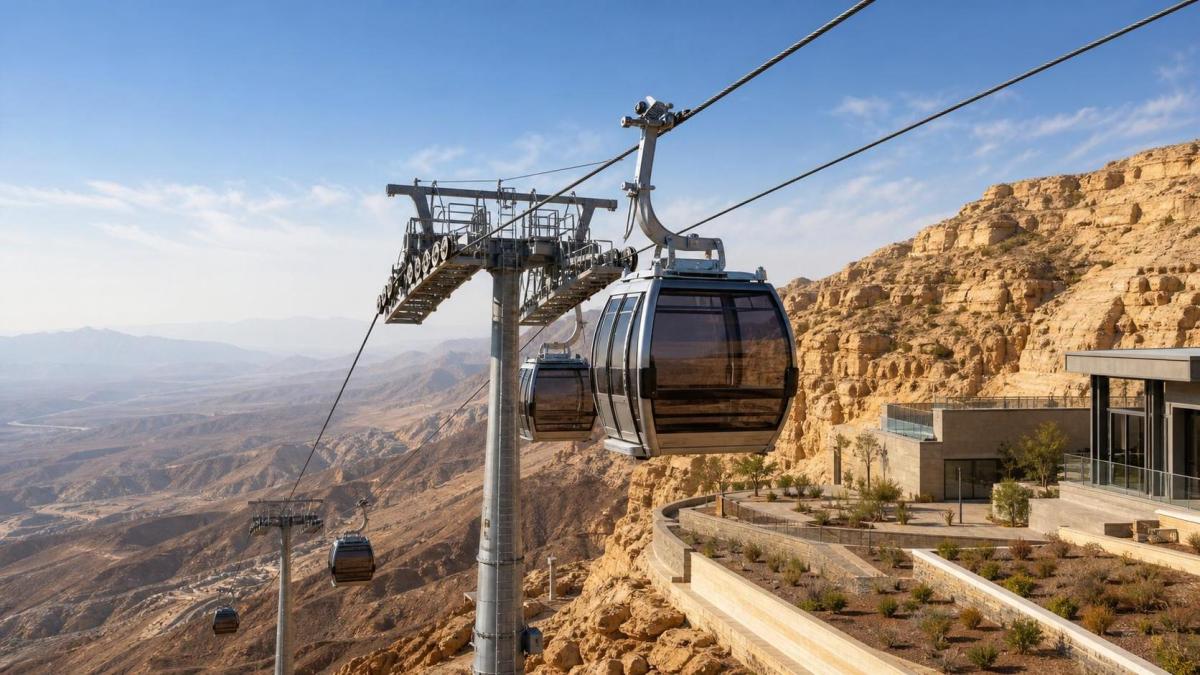
On June 24, 2026, the GCC and the tourism ministries of six countries including Saudi Arabia, the UAE, and Qatar moved to prioritize greener mountain leisure infrastructure by granting qualified Detachable Gondola Lifts suppliers both lower import tariffs and a faster certification path. For manufacturers, project owners, certification teams, and local service partners, the announcement is worth watching because it links market access not only to equipment supply, but also to energy management compliance and localized operations support.
What the memorandum confirms
According to the provided information, the GCC and the tourism ministries of six countries signed a Memorandum of Cooperation on Sustainable Mountain Leisure Infrastructure on June 24, 2026. The policy incentives apply to Detachable Gondola Lifts suppliers that meet ISO 50001 energy management certification requirements and can provide localized operations and maintenance support.
The confirmed incentives are twofold: import tariffs are reduced from 12% to 3%, and the GCC Conformity Marking (G-Mark) certification cycle is shortened to 14 working days. The first pilot projects identified in the announcement are the Al-Ula cultural and tourism zone in Saudi Arabia and the cableway upgrade project at Jebel Akhdar in Oman.
Where the immediate pressure points may appear
Equipment suppliers face a higher qualification threshold
From an industry perspective, suppliers of Detachable Gondola Lifts may be affected first because the incentive is clearly conditional. The potential impact is not limited to pricing; it also reaches pre-bid qualification, documentation readiness, and after-sales capability. What deserves closer attention is whether suppliers can present both ISO 50001-related compliance and credible localized operations support in a form procurement teams can use quickly.
Project owners and procurement teams gain leverage in vendor screening
For tourism developers and infrastructure buyers, the policy may reshape how supplier comparison is conducted. Analysis shows that tariff relief and a shorter G-Mark process could make compliance status and service localization more central in tender evaluation, especially where project timelines are sensitive. The practical focus is likely to be on whether a supplier can convert the policy incentive into a smoother procurement and delivery sequence.
Certification and local service functions become more commercially relevant
Certification support teams, local operations partners, and maintenance service providers may also see a more direct role. Observably, the announcement does not treat equipment import alone as sufficient; it ties eligibility to local support capability. That means the business impact may extend beyond manufacturing into certification preparation, technical documentation, maintenance planning, and partner coordination in the destination market.
What companies should watch next
Track how qualification language is applied in practice
Companies should pay close attention to how future official wording defines compliance for ISO 50001 and localized operations support. The policy signal is clear, but actual project qualification often depends on how requirements are written into procurement documents and certification submissions.
Prepare proof packages before bid activity accelerates
For suppliers and service partners, a near-term priority is document readiness. That includes certification materials, operational support descriptions, and any evidence needed to demonstrate local maintenance or service capability. The key issue is not only whether a company qualifies in principle, but whether it can prove that status within commercial timelines.
Separate policy incentives from execution reality
Analysis shows that a lower tariff and a 14-working-day G-Mark pathway are strong administrative signals, but they do not automatically resolve delivery, coordination, or project execution risks. Companies should distinguish between policy access and actual contract conversion, especially in pilot-stage projects.
Watch the pilot projects for practical benchmarks
The first projects in Al-Ula and Jebel Akhdar deserve attention because they may indicate how the memorandum is implemented in real procurement and upgrade scenarios. What deserves closer attention is not assumed volume or expansion, but the operational details that emerge around qualification, approval pace, and service expectations.
How this policy signal should be interpreted
Observably, this development is best understood as a targeted market-access signal rather than a fully settled market outcome. It shows that green performance and local service capability are being positioned together in procurement preferences for mountain leisure infrastructure. At the same time, the current information does not confirm how broadly the incentives will be applied beyond the named pilot projects, so continued observation remains necessary.
Why the announcement matters beyond a single tender cycle
From an industry perspective, the significance of this update lies in the way it combines tariff policy, certification speed, and service localization around one equipment category: Detachable Gondola Lifts. That makes it more appropriate to understand this as an early but meaningful policy direction for suppliers, buyers, and support partners operating in the GCC leisure infrastructure space, rather than as a final indicator of market scale or guaranteed procurement outcomes.
Basis of this report and what still needs verification
This article is based on the user-provided news title, event date, and event summary. For this type of industry update, relevant source categories usually include official government announcements, company statements, industry association releases, authoritative media reporting, and standards-related documentation. A specific official source link was not provided in the input, so further verification is still needed. Follow-up attention should focus on any detailed implementation rules, procurement language, certification guidance, and updates tied to the pilot projects in Saudi Arabia and Oman.
Recommended News