
Search News
Industry Portal
Hot Articles
- How to Evaluate an NDT Inspection Company for Amusement Ride Safety ComplianceChoose an NDT inspection company for amusement ride safety compliance with proven expertise, risk-based methods, clear reporting, and reliable corrective-action support.
- How to Evaluate Ski Resort Lift Suppliers for Capacity, Terrain, and Lifecycle SupportChoose a ski resort lift supplier with confidence: compare capacity, terrain resilience, wind performance, safety planning, and lifecycle support for smarter investments.
- Amusement Ride Dynamics: How Engineers Control G-Forces, Jerk, and Rider ComfortAmusement ride dynamics explained: see how engineers manage G-forces, jerk, restraints, braking, and testing to deliver safer, smoother rider comfort.
Popular Tags
UNICEF Opens Prequalification for Animatronic Figures
auth.
Time
Click Count
On June 11, 2026, the South Asia International Public Procurement Conference in Kunming announced that UNICEF has opened supplier prequalification for Animatronic Figures under an immersive educational theme park project. The initial procurement budget covers 12 countries across Southeast Asia and South Asia, making this development relevant not only to manufacturers of themed equipment, but also to certification teams, export compliance staff, localization service providers, and public procurement intermediaries. For the industry, the immediate point of attention is not only the tender access itself, but also the combination of safety, protection, and localization requirements now attached to entry.
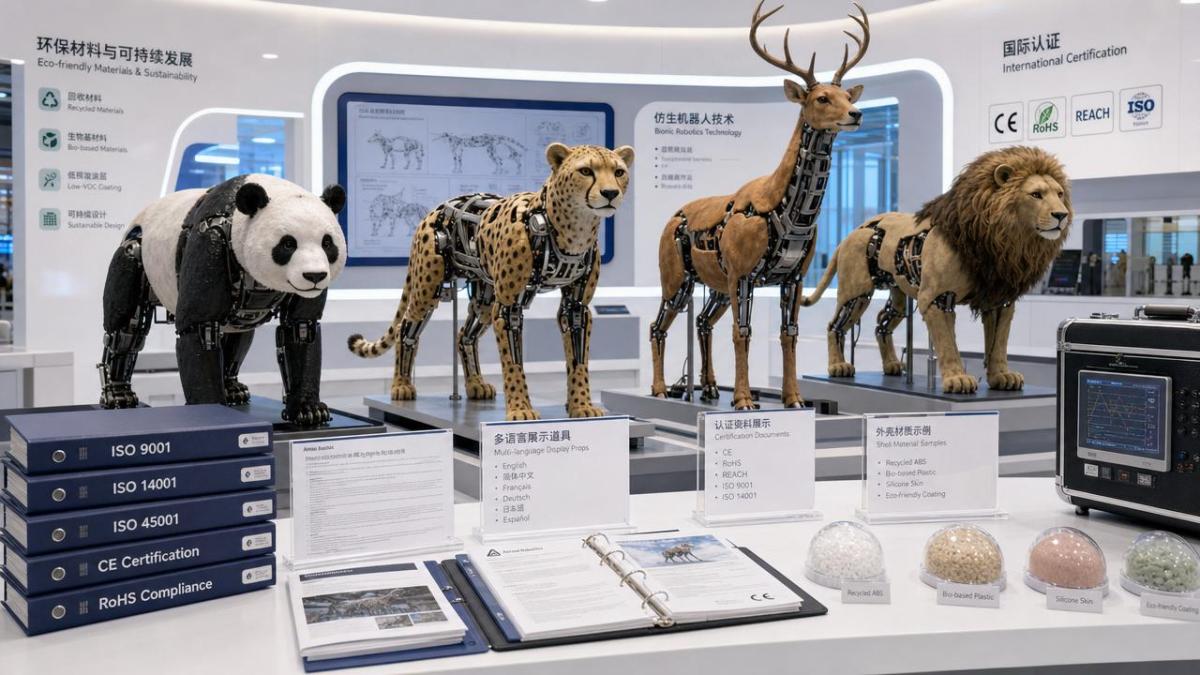
What the announcement confirms
According to the conference announcement made during June 11–13 in Kunming, UNICEF has formally opened the prequalification application channel for Animatronic Figures for an immersive educational theme park project. The first procurement budget is intended for 12 countries in Southeast Asia and South Asia.
The announced supplier requirements include ISO 13849-1 functional safety certification, a protection rating of at least IP55, and the ability to adapt content for local markets. For Chinese manufacturers, application materials must be submitted through the Yunnan International Procurement Service Center.
Where the immediate industry impact may appear
Manufacturers face a more defined entry threshold
From an industry perspective, the clearest impact is on companies producing animatronic or themed interactive equipment. The announcement points to a procurement path where technical access depends on documented functional safety, environmental protection performance, and localization capability, so affected business stages are likely to include product qualification preparation, technical documentation, and bid-entry readiness.
Compliance and certification work moves closer to the commercial front end
Analysis shows that certification, testing, and documentation teams may become more central at the pre-sales stage. Because ISO 13849-1 and IP55 or above are explicitly named, the influence is not limited to product engineering; it also reaches document control, audit preparation, and communication with procurement-facing service organizations.
Localization service providers may become part of supplier competitiveness
Observably, the requirement for localized content adaptation affects not only hardware suppliers but also content and implementation partners. The business impact may emerge in proposal preparation, product customization, and cross-market delivery planning, especially where the same product framework must fit multiple countries.
Procurement intermediaries and trade service organizations gain a procedural role
Because Chinese manufacturers are required to submit materials through the Yunnan International Procurement Service Center, procedural coordination becomes part of market access. For suppliers and service firms, this may affect submission workflows, timeline management, and communication responsibilities during prequalification.
What companies should watch now
Check whether existing certifications match the stated threshold
Companies considering participation should focus first on whether current product files and certifications directly correspond to the named requirements, rather than assuming adjacent certifications will be sufficient. What deserves closer attention is whether supporting documents are complete, current, and usable in a procurement review context.
Separate technical compliance from market adaptation work
The announcement combines safety and protection standards with local content adaptation, which means suppliers may need to treat these as parallel preparation tracks. One concerns technical conformity, while the other concerns whether the product can be adapted for use across the covered country set.
Prepare submission pathways, not only product materials
For Chinese manufacturers in particular, the submission route through the Yunnan International Procurement Service Center is a practical point to monitor. In operational terms, supplier readiness may depend as much on submission organization and document flow as on product capability itself.
Track whether later notices refine scope or procedures
Analysis shows that this announcement establishes the opening of prequalification, but companies should still watch for any later clarification on application details, review procedures, or project-specific implementation requirements. The distinction between a stated requirement and its later operational interpretation remains important.
Why this reads as a market signal rather than a final outcome
Observably, the current development is best understood as an access-stage signal in international public procurement rather than a confirmed volume outcome for any individual supplier. It shows that procurement demand for Animatronic Figures in an educational theme setting is being structured through clear entry conditions, but it does not yet establish which suppliers will qualify or how procurement execution will unfold in each market.
From an industry perspective, the stronger signal lies in the criteria mix: functional safety, environmental protection, and localization are presented together. That combination suggests that future competition in this segment may depend not only on manufacturing capacity, but also on the ability to organize compliance and adaptation as part of export delivery.
How this development is best understood at this stage
At this stage, it is more appropriate to understand the announcement as a concrete short-term procurement opening with broader long-term implications for supplier qualification standards. The near-term task for companies is practical preparation for prequalification, while the longer-term question is whether similar procurement logic appears again in related international public sector projects. For now, the development warrants close attention, but not overstatement.
Basis of this article and what still needs verification
This article is based on the user-provided news title, event date, and event summary. The analysis above separates confirmed facts from observation and judgment.
For this type of industry update, commonly relevant source categories may include official announcements, organizational notices, industry association releases, authoritative media reports, and standards documentation. A specific official source link was not provided in the input, so further verification is still needed as additional notices or procedural details emerge. Follow-up attention should focus on whether official application guidance, procedural clarifications, or further procurement-related updates are subsequently released.
Recommended News